The Make Matters
As another season of snowmobile films and content arrives, our feeds fill up with big airs, new tricks and plenty of riders pushing the limits. We reward these images with our likes, our follows and our attention because we all want to see the sport pushed. But what we choose to celebrate matters: we should reward execution, style and control—not just the attempt. The makes matter, because celebrating bold moments without clean landings can lower the standard of progression.
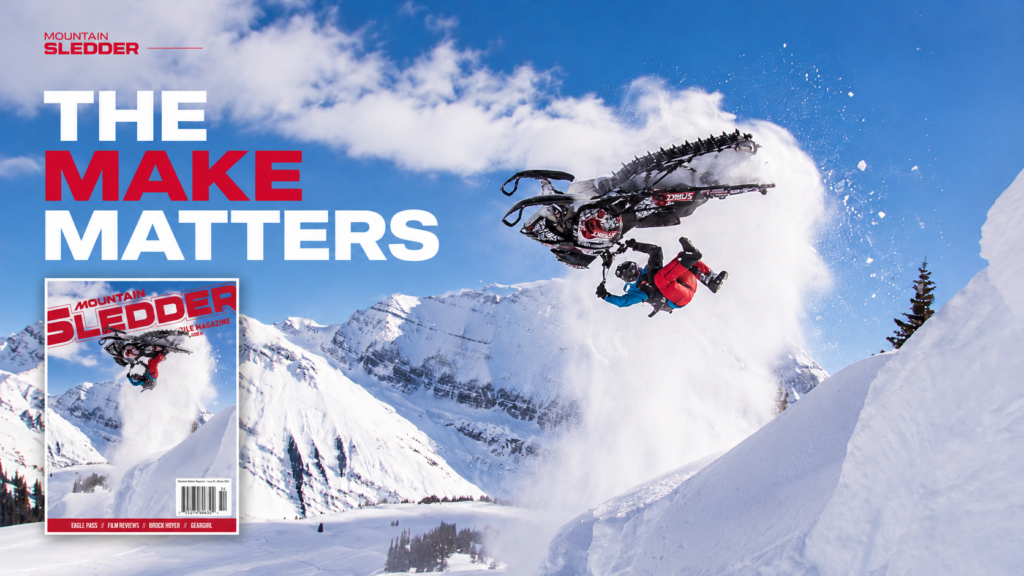
Back when we were building Mountain Sledder Magazine, choosing the cover was one of the most important decisions we made.
I always believed the cover should do more than sell the magazine. It should say something about where mountain snowmobiling was at that moment—and, ideally, where it was going. We wanted Mountain Sledder to be progressive. We wanted to recognize riders who were pushing the sport forward and images that showed something we hadn’t seen before.
One of the people I spent a lot of time having those conversations with was my graphic designer Shane, who came from hardcore skateboard culture. He cared deeply about what went on the cover, and he brought a perspective from skateboarding that influenced the way I looked at action-sports imagery.
One cover in particular has stuck with me. It was Riley Suhan on Issue 9.
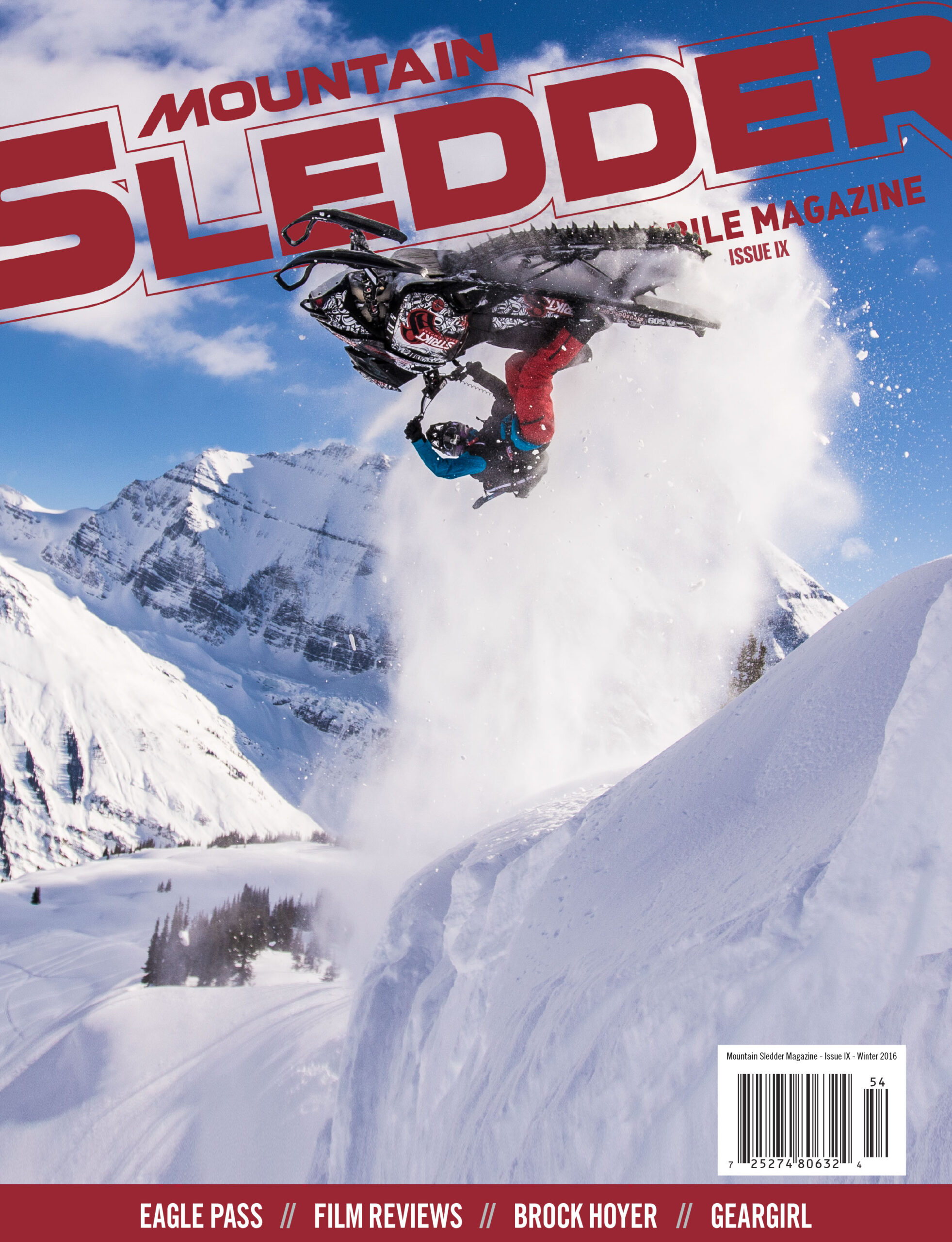
MSM 9 Cover
At the time, Riley was hitting cornices in a way I hadn’t really seen before. He would come at them incredibly hard and fast, almost straight on, and send the sled way up into the sky. It was aggressive, committed and spectacular to photograph. There weren’t many riders doing it that way then, and Riley remains one of the best I’ve ever watched at that particular type of maneuver. Riley was also on a tear that 2015 season. He was breaking out in films and shots of him were everywhere. So it felt right to put him on the cover.
We had the image. It looked incredible.
There was only one problem.
It wasn’t a make.
Riley had made a maneuver on that feature. He had less spectacularly done what the photograph represented. But the actual frame we wanted to use came from a different attempt—one he didn’t ride away from.
To me, at the time, that distinction didn’t seem enormous. We weren’t falsely representing what Riley was capable of doing. He had made a similar move. We simply had a more spectacular photograph from another attempt.
Shane did not see it that way.He pushed back hard because he thought Mountain Sledder’s credibility was on the line.
In his world it wasn’t fair. You couldn’t take a failed attempt, freeze it at the most spectacular instant, and present that image as the accomplishment. Because it wasn’t a make.
We ran the cover anyway, so I’m guilty of embellishing a moment. I chose the spectacular moment over the actual make. But over time I’ve come to appreciate how important the distinction is. I’ve seen a few celebrated pieces where some of the biggest moments simply weren’t makes, and I think we need to be cautious about celebrating it—as riders, filmmakers, media producers and fans. If we celebrate the attempt as though it were the accomplishment, eventually we lower the standard of what accomplishment means.
If we celebrate the attempt as though it were the accomplishment, eventually we lower the standard of what accomplishment means.
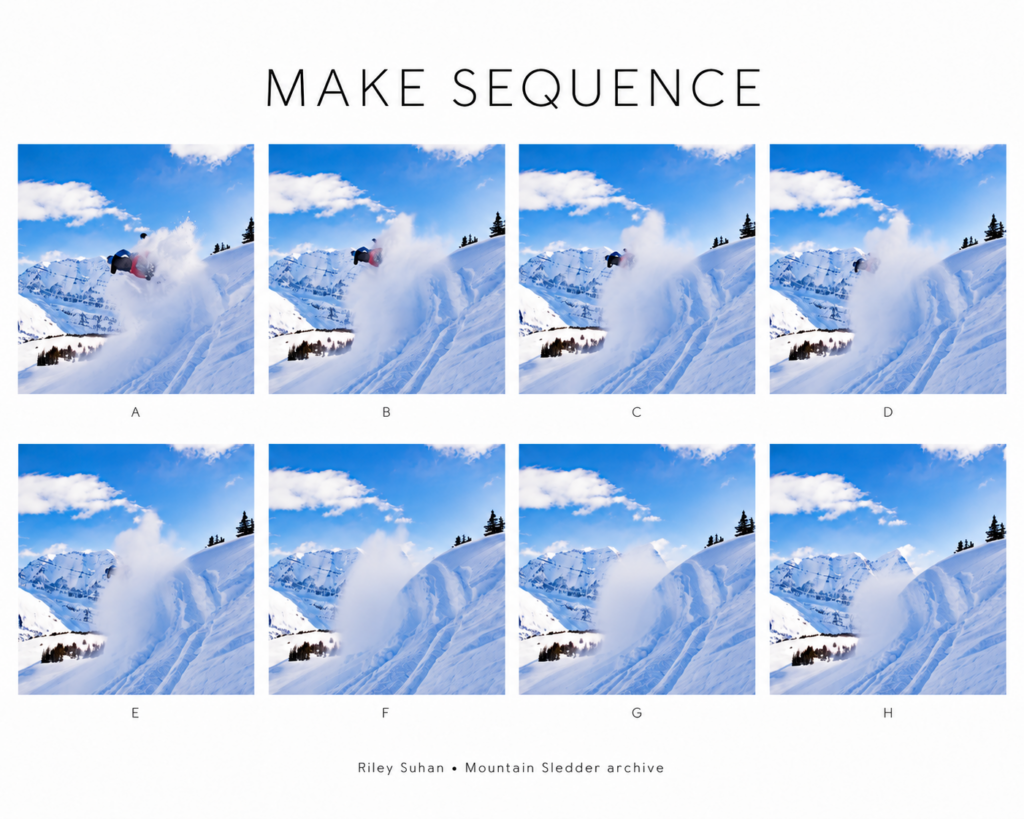
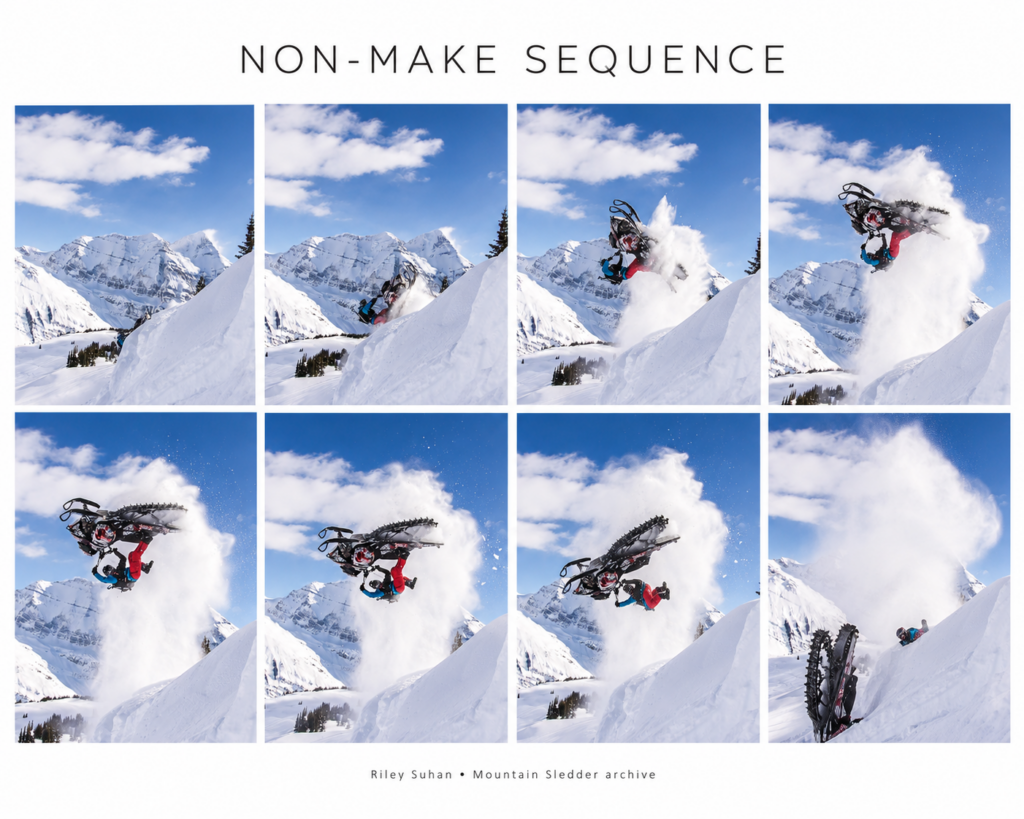
What is a make?
The definition is almost absurdly simple.
You do the maneuver.
You land it.
You ride away.
That’s the make.
There can obviously be degrees within that. There is a difference between barely hanging onto something and absolutely stomping it. There are clean makes and ugly makes. There are landings where the rider has to fight for it and others where it looks smooth.
But there is also a fundamental difference between attempting something extraordinary and completing something extraordinary.
The make is the line between the two.
And I think snowmobiling, at times, has given too much credit to the first half of that equation.
We are very good at celebrating the attempt. And in the age of slo-mo, maybe we’ve become more interested in the moment than the make. How many times have we seen a clip cut before the landing is shown?
Watch enough sled videos and you know the scene. A rider tries something huge. Maybe the rotation is there. Maybe the distance is there. Maybe the landing is almost there.
Then it goes sideways. But he survives it.
Then he looks at the camera, throws his arms in the air, gives the devil horns and claims it. Sometimes this will even produce more views than if everything had gone right.
There is a difference between saying, “I almost did that,” and saying, “I did that.”
I think we can be more disciplined about celebrating that distinction.
Execution Is Part of the Trick
That isn’t just my opinion. Across action sports and powersports—from freestyle motocross to skateboarding and snowboarding—execution has always been part of the maneuver itself.
The language changes from sport to sport, but the principle is remarkably consistent.
Takeoff. control, style and riding away matters.
Judging systems make this explicit. A difficult maneuver does not receive full value simply because the athlete initiated it or because the most spectacular part happened in the air. Execution continues all the way through the landing.
A hand touch matters.
A washout matters.
Losing control matters.
Getting injured matters.
That doesn’t necessarily mean the maneuver has no value but context matters, particularly in the backcountry.
The Make Is Also About Safety
There is another reason the make matters.
What we celebrate influences what riders chase.
If we celebrate only the biggest air or wildest attempt, without showing the consequences when it goes wrong, we risk glorifying the wrong thing.
Big mountain snowmobiling already carries serious consequences. Putting more value on landing clean, staying in control and riding away rewards better riding—and, ultimately, safer progression.
There is a difference between celebrating risk and glorifying failure.
The goal should still be to go big, push the sport and try something new.
But the goal must always remain to ride away.
Watch the Whole Clip. Or better yet, demand it.
This matters even more in the way we consume snowmobiling now.
A photograph can freeze the most spectacular instant. A Reel can cut at impact. An edit can move on before you’ve really seen whether the rider remained in control.
And sometimes the failed attempt simply looks better than the make.
That’s exactly what happened with the Riley cover.
So when this year’s films and edits start dropping, watch a little longer.
And it’s okay to demand more of the editors, because they’re the ones shaping the vision. Big and dynamic airs deserve to have their landings shown and if they’re not, then it’s probably assumed the make didn’t happen. And if they didn’t happen, then we shouldn’t celebrate like they did.
—
Further Reading
Here’s some links that were referenced while writing this article:
Getting the Make: Japanese Skateboarder Videography and the Entranced Ethnographic Lens
https://www.pomoculture.org/2013/05/18/3194/
Face The Forbinator! — TransWorld SKATEboarding
https://www.skateboarding.com/archives/face-the-forbinator
Ruff Ryders — Ride Or Die — TransWorld SKATEboarding
https://www.skateboarding.com/archives/ruff-ryders-ride-or-die
Surfing Australia Rule Book
https://assets.surfinginaustralia.com/wp-content/uploads/sites/11/2023/02/09145749/SA_Rule_Book_2023_V03.pdf
ISA Contest Administration Rulebook
https://www.isa.org.il/wp-content/uploads/2016/07/ISA-Rulebook_Feb2016.pdf
FIS Snowboard Judges Handbook
https://assets.fis-ski.com/f/252177/7c81eac52f/fis_sb_fk-judgeshandbook_update_spring-2022.pdf